French Seared Steak with Cognac Cream Sauce: Decadent & Rich
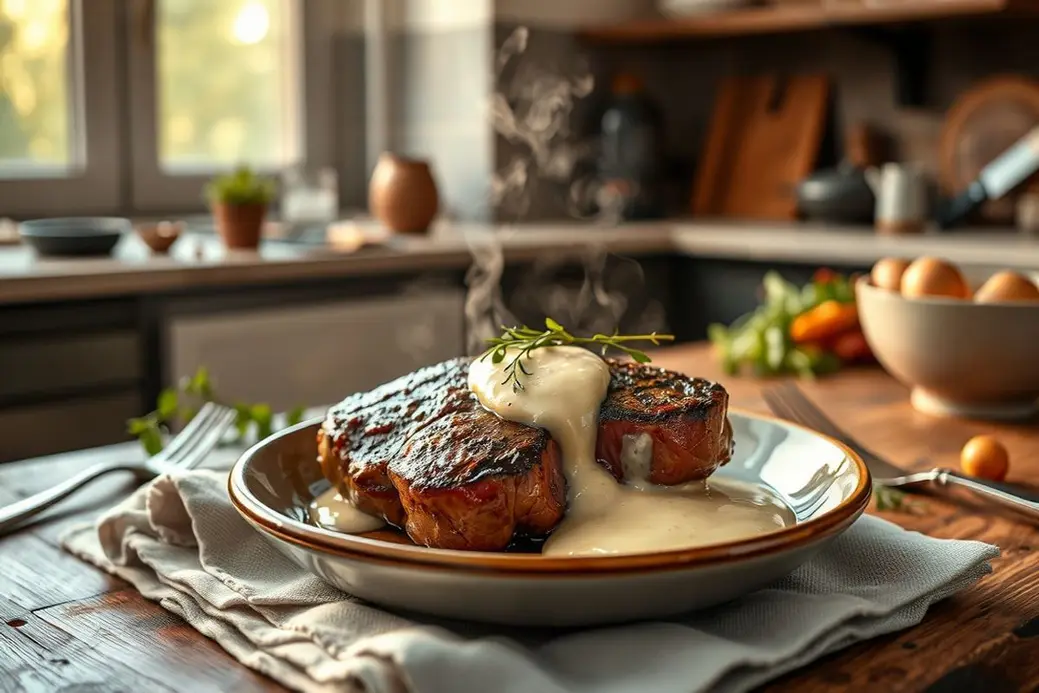
It was one of those nights when I needed something that felt like a hug in food form — and French Seared Steak with Cognac Cream Sauce was exactly that. I had just come home from a long day of recipe testing that ended in a flour explosion, and all I wanted was something rich, silky, and indulgent. I pulled out a couple of ribeyes, grabbed the cognac from the back of the liquor cabinet (don’t ask how long it had been there), and let the kitchen fill with that buttery, boozy aroma. Honestly, I didn’t expect it to turn out as good as it did — but that first bite? Pure velvet. If you’re looking for more inspiration, check out my Main Dishes section for more cozy classics.
Why You’ll Love This Recipe
French Seared Steak with Cognac Cream Sauce feels like a warm blanket on a cold night — the kind of meal that wraps around you and makes you forget the world outside. There’s something deeply comforting about the way the cream melts into the cognac, creating a sauce that’s both luxurious and familiar. It’s the kind of dish that makes you want to light candles, pour a glass of wine, and pretend you’re in a little Parisian bistro.
And let’s be real — making this at home is way cheaper than ordering it at a restaurant. You get that same restaurant-quality experience without the sticker shock. Plus, you control the ingredients, so you can use the best steak your budget allows and still come out ahead.
Even picky eaters tend to love this. The creamy sauce mellows out the bold flavors of the cognac and mustard, making it approachable without losing its sophistication. If someone in your house is steak-averse, this sauce might just change their mind.
It’s also surprisingly good for meal prep. I’ve been known to make extra sauce and keep it in the fridge for a quick drizzle over leftover steak or even roasted potatoes. The flavors deepen overnight, and it reheats beautifully — just don’t boil it or the cream will break.
Date night? Check. Dinner party? Double check. This dish has that “wow” factor without requiring you to be a professional chef. It’s impressive, but not intimidating — the perfect balance for entertaining.
And the flavor? Oh, the flavor. The sear on the steak gives you that satisfying crust, the cognac adds a subtle warmth, and the cream ties it all together with a silky finish. It’s the kind of thing you’ll crave again and again — trust me, I’ve made it twice in one week before.
Ingredient Breakdown
For the steak, I like ribeye or sirloin — something with good marbling so it stays juicy. You’ll need about 1 to 1½ pounds, cut into two portions. Salt and freshly cracked black pepper are non-negotiable here; they’re the foundation of flavor.
The cognac is where things get interesting. I’ve used both expensive and mid-range bottles, and honestly, the mid-range works just fine. Just make sure it’s drinkable — no cooking wine nonsense. If you don’t have cognac, brandy is a fine substitute, but don’t skip the booze entirely; it’s what gives the sauce its signature depth.
For the sauce, you’ll need butter (unsalted, so you can control the saltiness), finely chopped shallots, Dijon mustard, heavy cream, and beef broth. The shallots are key — they melt into the sauce and add a subtle sweetness. I once tried using onion instead and it was… fine, but not the same. Learn from my mistake.
A little fresh thyme or parsley at the end brightens everything up. I almost always forget the herbs until the last second, then panic-chop them while the sauce is still hot. It works, but try to remember earlier.
One note: don’t skimp on the cream. I tried using half-and-half once because I was out of heavy cream, and the sauce curdled. It was edible, but not pretty. Sometimes you just have to embrace the indulgence.
Step-by-Step Instructions
Start by taking your steak out of the fridge at least 30 minutes before cooking. This is non-negotiable — cold steak = uneven cooking. Season both sides generously with salt and pepper. I usually go heavier than I think I should; most of it will fall off during searing anyway.
Heat a heavy skillet over medium-high heat. I use cast iron because it holds heat like a dream, but stainless steel works too. Add a splash of oil (something with a high smoke point, like avocado or grapeseed), then lay the steaks in the pan. They should sizzle immediately. If they don’t, your pan isn’t hot enough — take them out and wait.
Cook for about 4-5 minutes per side for medium-rare, depending on thickness. Don’t move them around — let them develop that gorgeous crust. I once got impatient and kept flipping, and the steak turned out grey and sad. Patience is key.
Once they’re done, transfer the steaks to a plate and tent with foil. Now, turn the heat down to medium and add the butter to the pan. Toss in the shallots and cook until soft and fragrant — about 2 minutes. This is when your kitchen starts to smell amazing.
Carefully pour in the cognac. Stand back — it might flame up, and that’s normal. If it doesn’t, don’t worry; just let it simmer for a minute to cook off the alcohol. Stir in the mustard and broth, then let it reduce by half.
Lower the heat and stir in the cream. Let it thicken slightly, then taste and adjust seasoning. Slide the steaks back into the pan to warm through, spooning sauce over them. Sprinkle with herbs and serve immediately.
Oops moment: the first time I made this, I added the cream while the pan was still too hot and it separated. It still tasted good, but it looked like a science experiment. Now I always take the pan off the heat for a minute before adding dairy.
What to Serve With
Creamy mashed potatoes are the obvious choice — they soak up the sauce like little flavor sponges. Plus, they make the whole plate feel extra cozy.
A simple green salad with a sharp vinaigrette cuts through the richness of the steak and sauce. I like arugula with lemon and olive oil — the peppery bite is perfect.
Roasted asparagus or green beans add color and a bit of crunch. Toss them with olive oil, salt, and pepper, then roast at 400°F for about 10 minutes.
And if you’re feeling fancy, a glass of red wine (something medium-bodied like Merlot or Syrah) ties the whole meal together. It’s not required, but it sure doesn’t hurt.
Pro Tips and Variations
If you want a spicier kick, add a pinch of cayenne or a dash of hot sauce to the cream sauce. It won’t overpower the dish, just give it a little edge.
For a vegetarian version, swap the steak for thick slices of portobello mushroom. Sear them the same way and proceed with the sauce — it’s surprisingly satisfying.
To make it gluten-free, just double-check that your broth and mustard are certified gluten-free. Most are, but it’s worth confirming.
If you’re cooking for guests, sear the steaks ahead of time and finish them in the oven. That way, you’re not stuck at the stove while everyone else is having fun.
In the fall, try adding a splash of apple cider to the sauce along with the cognac. It adds a subtle sweetness that works beautifully with the cream.
Leftover sauce? Toss it with pasta the next day. Add some peas or spinach for a quick, comforting lunch.
And if you’re watching your fat intake, you can use half-and-half instead of cream, but be extra gentle with the heat to avoid curdling. For more on gluten-free options, check out this guide to the Gluten-free diet.
Storing and Reheating
Store leftover steak and sauce separately in airtight containers in the fridge for up to 3 days. The sauce might thicken as it cools — just whisk in a splash of broth or cream when reheating.
To reheat, warm the steak gently in a low oven (250°F) until just heated through. Reheat the sauce on the stovetop over low heat, stirring constantly. Whatever you do, don’t microwave the sauce — it will separate and turn greasy.
I once tried to speed things up by microwaving the whole plate, sauce and all. It was a disaster. The steak turned rubbery, and the sauce looked like it had been through a blender. Lesson learned: low and slow is the way to go.
The steak itself holds up well to reheating if you’re careful, but the sauce is the real star here — it’s what makes leftovers feel special.
Customizations for Special Diets
For gluten-free, use tamari instead of soy sauce if your broth contains any, and double-check all packaged ingredients. Most Dijon mustards are naturally gluten-free, but labels vary.
For dairy-free, swap the butter for olive oil and the cream for full-fat coconut milk. The flavor will change a bit, but it’ll still be rich and delicious.
If you’re watching fat, use half-and-half instead of cream and cut the butter in half. The sauce won’t be as thick, but it’ll still be tasty.
For high-protein, serve the steak with a side of lentils or white beans. They’ll soak up the sauce and add a nice textural contrast.
Common Mistakes to Avoid
One of the biggest mistakes is not letting the steak come to room temperature before cooking. Cold meat cooks unevenly, leaving you with a steak that’s overdone on the outside and raw in the middle. Always give it at least 30 minutes on the counter.
Another common error is moving the steak too much while it sears. You want to leave it alone so it develops that deep, caramelized crust. Every time you flip it, you interrupt that process.
Adding cream to a pan that’s too hot is a surefire way to end up with a broken sauce. Always lower the heat and give it a minute to cool before stirring in dairy.
Using cooking wine or cheap cognac will make your sauce taste harsh and unbalanced. If you wouldn’t drink it, don’t cook with it.
Finally, don’t skip the resting period after cooking. Cutting into the steak too soon will release all those precious juices, leaving you with a dry, tough piece of meat. Let it rest for at least 5 minutes — your patience will be rewarded.
Frequently Asked Questions
Can I use a different type of steak?
Absolutely. Ribeye and sirloin are my go-tos, but filet mignon, New York strip, or even flank steak will work. Just adjust cooking times based on thickness.
What if I don’t have cognac?
Brandy is the closest substitute. If you don’t have either, you can use bourbon or even a good dry sherry, though the flavor will be different.
Can I make the sauce ahead of time?
Yes, but it’s best fresh. If you do make it ahead, store it in the fridge and reheat gently on the stovetop, whisking in a little extra cream or broth if needed.
Is there a non-alcoholic version?
You can omit the cognac and use beef broth plus a splash of apple cider vinegar for acidity. It won’t be the same, but it’ll still be tasty.
Can I freeze the sauce?
Technically yes, but cream sauces don’t freeze well — they tend to separate when thawed. If you must freeze it, reheat very gently and whisk constantly to bring it back together.
Troubleshooting
| Problem | Cause | Solution | | :— | :— | — | | Steak is grey and lacks crust | Pan not hot enough or steak moved too much | Preheat pan thoroughly; leave steak undisturbed while searing | | Sauce curdles or separates | Dairy added to pan that’s too hot | Lower heat and let pan cool slightly before adding cream | | Steak is overcooked | Cooking time too long or heat too high | Use a meat thermometer; aim for 130°F for medium-rare | | Sauce is too thin | Not enough reduction or too much liquid | Simmer longer to reduce, or add a cornstarch slurry | | Sauce lacks depth of flavor | Low-quality cognac or skipping reduction step | Use drinkable cognac; let sauce reduce to concentrate flavors |
Final Thoughts
French Seared Steak with Cognac Cream Sauce is one of those recipes that feels special every single time I make it. It’s the kind of meal that turns an ordinary Tuesday into something worth remembering. I’ve made it for date nights, for friends who dropped by unexpectedly, and even just for myself when I needed a little kitchen therapy. Every time, it delivers that perfect balance of comfort and indulgence. If you try it, I’d love to hear how it turned out — did you stick to the recipe, or did you make it your own? And more importantly, what did you serve it with? Let me know in the comments — I’m always looking for new pairing ideas.
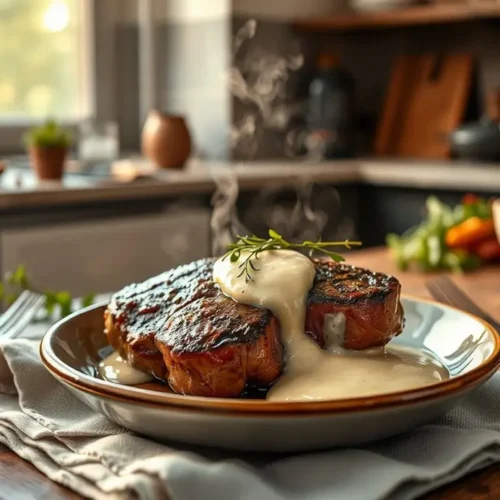
That Fancy French Steak That’ll Make You Swear in French
Ingredients
- 2 thick-cut beef steaks (ribeye or sirloin — whatever makes your wallet cry least)
- Salt and pepper — enough to make it rain
- 2 tbsp butter — the real stuff, not that fake spread
- 1 shallot, finely chopped — or half an onion if you’re not fancy
- 1/2 cup cognac — the good stuff, not the cooking wine impostor
- 1 cup heavy cream — don’t even think about using milk
- 1 tsp Dijon mustard — the grainy kind if you’re feeling extra
- Fresh thyme — optional, but it makes you feel like you know what you’re doing
Instructions
- Take your steaks out of the fridge and let them sit for 30 minutes. I know, waiting sucks, but cold steak in a hot pan is just sad.
- Pat them dry with paper towels like you’re mad at them. Season both sides with enough salt and pepper to make it snow.
- Heat a cast iron skillet until it’s screaming hot. Add a little oil, then sear those steaks for about 4 minutes per side for medium-rare. They should look like they’ve been to the beach and got a really good tan.
- Take the steaks out and let them rest under a foil tent. They’re napping, don’t disturb them.
- In the same pan, add butter and shallots. The butter will foam like it’s excited, and the shallots will smell like heaven.
- Pour in the cognac. It’ll steam and hiss like a cat in a bath. If you’re brave, tilt the pan slightly to let the fumes catch fire — it’s dramatic and makes you feel like a chef.
- Let it reduce by half, then add the cream and mustard. Whisk like you’re mad at someone who stood you up.
- Simmer until it coats the back of a spoon. If it’s too thick, add a splash more cream. If it’s too thin, whisper encouraging words and keep cooking.
- Slice the steaks against the grain, pour that glorious sauce over top, and garnish with thyme if you’re feeling fancy. Eat immediately while standing over the stove if no one’s watching.